
Autonomous Robots for Healthcare & Medical Facilities
Build a more consistent facility operation with autonomous cleaning and selected material-transport workflows. KUBY helps hospitals, clinics, senior living residences and healthcare organizations in Quebec assess, deploy and support commercial robotics around real operational needs.
Assessment, mapping and commissioning
Practical onboarding for operators
Deployment support adapted to Quebec facilities
A closer look at your environment.


Manufacturer visuals illustrating environments and robot features.
Healthcare facilities need consistency without compromising procedures
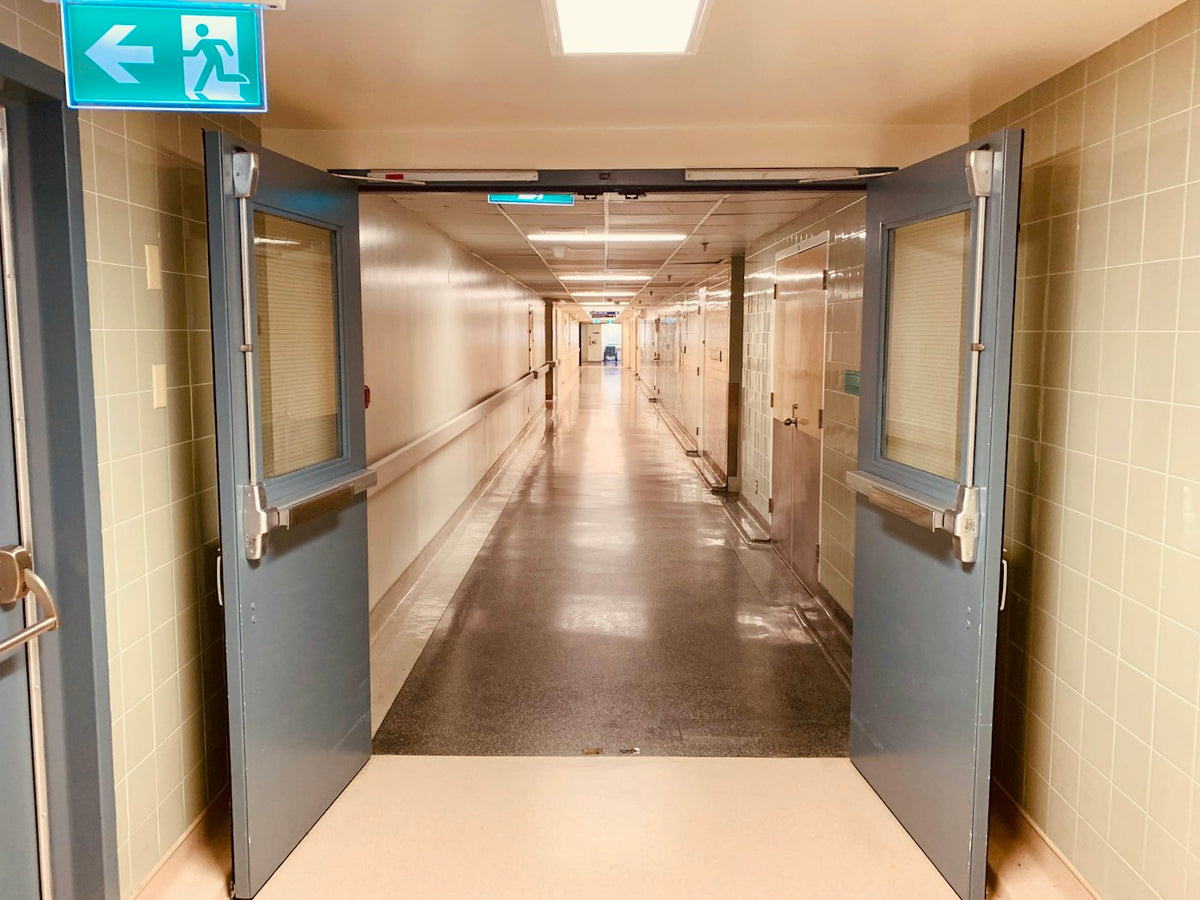
Hospitals and medical environments combine long corridors, public entrances, waiting areas, administrative zones and changing traffic. Robotics is strongest when applied to repetitive, measurable tasks while specialized cleaning and clinical procedures remain with trained teams.
Automate suitable scrubbing or sweeping missions in corridors, lobbies and common areas.
Mapped missions and schedules can make routine floor-care execution more predictable.
Redirect employee time toward detail work, inspections, exceptions and higher-priority tasks.
Use mission history and utilization data to understand where automation is contributing.
Commercial robots for healthcare environments
The right robot depends on the task, route, floor type, traffic and facility requirements. KUBY evaluates the workflow before recommending a platform.
CenoBots L3
Compact autonomous floor scrubber suited to corridors, clinics, residences and tighter commercial routes.
Explore L3 →CenoBots L4
Autonomous scrubber for facilities where edge and perimeter floor-care coverage matters.
Explore L4 →PUDU CC1 Pro
Versatile autonomous cleaning platform for broader commercial floor-care programs.
Explore CC1 Pro →PUDU T300
Autonomous delivery platform to evaluate for suitable nonclinical internal material transport workflows.
Explore T300 →Robots in action
See the CC1 in a hospital.
A Pudu Robotics demonstration illustrates autonomous floor cleaning in a healthcare environment.
Watch on YouTubeVideo source : Pudu Robotics
Match the robot to the actual healthcare workflow
| Need | Robot to evaluate | Why it may fit | KUBY validates |
|---|---|---|---|
| Compact corridor and common-area scrubbing | CenoBots L3 | Compact autonomous floor-care format | Route width, floor type, traffic and cleaning window |
| Edge and perimeter-focused floor care | CenoBots L4 | Emphasis on perimeter coverage | Edges, obstacles, floor condition and traffic |
| Broader multipurpose commercial cleaning | PUDU CC1 Pro | Versatile autonomous cleaning platform | Cleaning modes, route demand, docking and workflow fit |
| Selected nonclinical internal transport | PUDU T300 | Autonomous material movement | Payload workflow, doors/elevators, traffic, policy and safety requirements |
A deployment process built around the facility
A robot is only useful when it works with the building, staff and operating procedures. KUBY structures deployment around the site rather than simply delivering hardware.
Review repetitive tasks, floor types, route widths, elevators, doors, public traffic and operating windows.
Separate appropriate automation opportunities from clinical, infection-control or specialized procedures.
Choose technology based on the real task and environment.
Configure routes and validate behaviour around obstacles, staff and building traffic.
Train designated users on operation, charging, consumables, maintenance and exceptions.
Review utilization and refine routes as the facility learns where automation delivers the most value.
Measure ROI from real tasks—not generic promises
A useful robotics business case starts with work being performed today and models only the portion that can realistically be automated.
Measure route duration, frequency and employee involvement.
Model how often the robot can realistically operate within site constraints.
Consider service, maintenance, charging, consumables and oversight.
Identify higher-value work teams can perform when repetitive routes consume fewer manual hours.
Six factors KUBY reviews with your team
Surface type, transitions, slopes and cleaning requirements.
Patients, visitors, staff, carts, beds and peak circulation periods.
Areas governed by clinical, privacy, infection-control or security procedures.
Doors, elevators, charging locations, connectivity and integration requirements.
Routine floor care versus disinfection, terminal cleaning or specialized procedures.
Who supervises the robot, performs daily checks and handles exceptions.
Healthcare robotics questions
Do autonomous cleaning robots replace hospital cleaning staff?
No. They are best used for repetitive, structured floor-care missions. Trained employees remain essential for disinfection, detail cleaning, inspections, spills, exceptions and procedures governed by facility policy.
Can a robot perform clinical disinfection or sterilization?
A floor-cleaning robot should not be presented as a substitute for clinical disinfection, terminal cleaning or sterilization protocols. Automation scope must follow the facility's procedures.
Can robots work while patients, visitors and employees are present?
Many commercial robots are designed for dynamic environments, but deployment depends on route configuration, traffic, site rules and operating windows. These conditions should be validated during commissioning.
Can robots use elevators or automatic doors?
Possible integrations depend on the robot, building systems and project scope. KUBY evaluates these requirements during technical assessment rather than assuming compatibility.
Which healthcare facilities are good candidates?
Facilities with repeatable routes, sufficient operating windows and clearly defined floor-care tasks are often strong candidates. Hospitals, clinics, senior living residences and institutional healthcare environments can be assessed individually.
How is ROI calculated?
A responsible estimate uses current task duration and frequency, realistic robot utilization, labour involvement, service and maintenance costs, charging and the value of employee time that can be reassigned.
Does KUBY support healthcare deployments across Quebec?
KUBY supports commercial robotics projects in Quebec with site assessment, configuration, mapping, training and ongoing deployment support adapted to the facility and region.
Is autonomous robotics a fit for your healthcare facility?
KUBY can assess your routes, floor-care workload and operational constraints to identify where automation makes sense—and where it does not.
Book a Site AssessmentExplore CenoBots in QuebecLet’s see what fits